



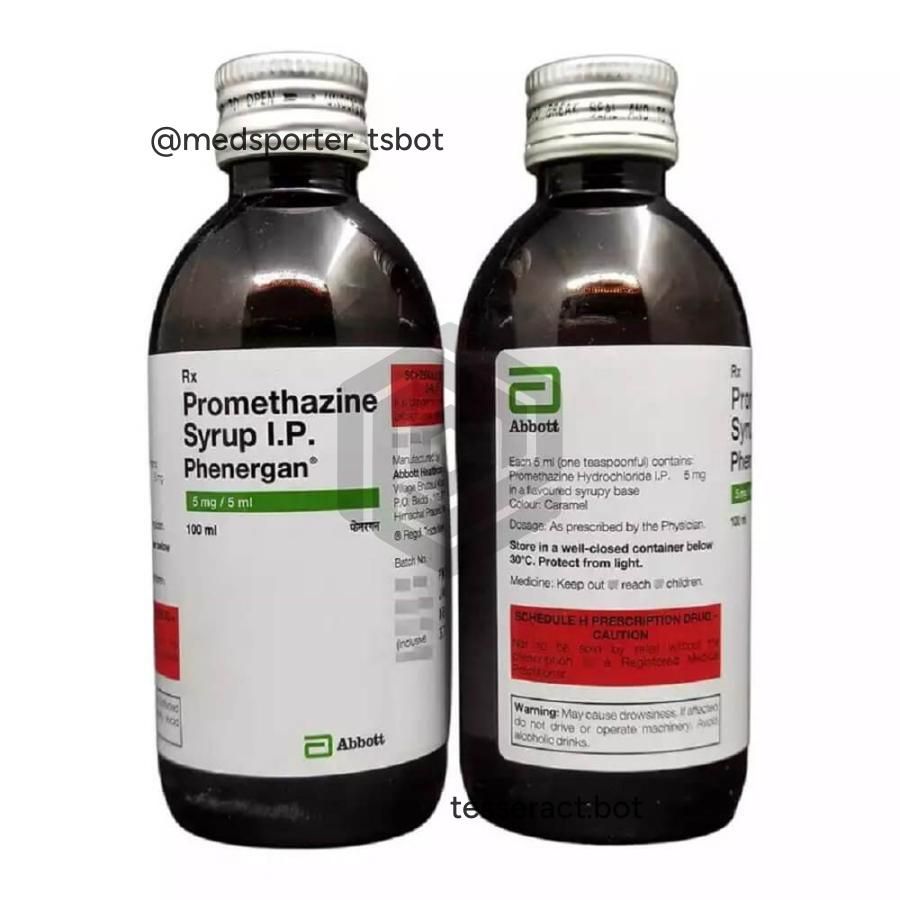


Promethazine Syrup (Phenergan) 100 ml delivers a versatile prescription-only antihistamine and sedative solution. It uses promethazine as the active ingredient, a first-generation phenothiazine with antihistaminic, antiemetic, sedative, and mild antipsychotic properties. Because it works centrally on H1 receptors and in the brain, it helps reduce allergy symptoms, nausea, motion sickness, and can aid sleep in specific clinical settings.
This syrup comes in a 100 ml bottle, and 1 piece (pcs) equals one full bottle. It sells from £30.00 per bottle. The formulation originates from Abbott Laboratories, a well-established pharmaceutical manufacturer.
Why Choose Promethazine Syrup (Phenergan) 100 ml?
You may choose Promethazine Syrup for its multiple clinical uses. Because it exerts antihistamine and sedative effects, doctors in the UK often prescribe it for:
-
Allergic reactions (hay fever, urticaria, rashes)
-
Motion sickness and nausea
-
Preoperative sedation
-
Occasional use as a short-term aid for insomnia (in certain patients)
Because Promethazine acts quickly—often within 20 to 60 minutes—you can expect symptom relief relatively soon after dosing. Also, because it combines multiple therapeutic actions in one formulation, it offers convenience for conditions involving both nausea and allergy symptoms.
Key Product Specifications
-
Product Name: Promethazine Syrup (Phenergan) 100 ml
-
Active Ingredient: Promethazine
-
Manufacturer: Abbott Laboratories
-
Formulation: Syrup / oral liquid
-
Volume: 100 ml per bottle
-
Prescription Classification: POM (Prescription Only Medicine)
-
Price: From £30.00 per bottle
-
Unit: 1 piece = 1 bottle
How to Use Promethazine Syrup Safely
You should always take Promethazine exactly according to your doctor’s instructions. Typically, the dose depends on the indication:
-
For allergy symptoms: smaller doses given 2 to 4 times daily
-
For nausea or motion sickness: one dose before travel or as needed
-
For sedation or sleep aid: a dose at bedtime, when clinically justified
Use a proper measuring device (oral syringe or measuring cup) to dose accurately. Because Promethazine can cause drowsiness, do not operate heavy machinery, drive, or perform tasks requiring alertness after taking it. Also, avoid alcohol and other sedatives, which can compound sedative effects.
If you need to stop using Promethazine after longer use, your clinician should guide a gradual taper process to prevent side effects or rebound symptoms.
Side Effects & Precautions
Although many patients tolerate Promethazine well, some may experience side effects including:
-
Drowsiness or sedation
-
Dizziness or lightheadedness
-
Dry mouth
-
Blurred vision
-
Urinary retention
-
Constipation
-
Rare effects: respiratory depression (especially in sensitive patients), confusion, or hypotension
You should inform your doctor if you have respiratory disease (e.g. asthma, COPD), liver disease, cardiovascular disease, glaucoma, or urinary retention. In children, especially under 2 years, Promethazine carries increased risks and generally should be avoided.
Because of sedative and central nervous system depressant effects, co‑use with alcohol, opioids, or other sedatives increases danger significantly.
Conclusion
Promethazine Syrup (Phenergan) 100 ml offers a multi‑purpose prescription solution for allergy symptoms, nausea, motion sickness, and in select cases, short‑term sedation. Because it combines multiple therapeutic actions, it can simplify treatment regimens when used under clinical supervision.